Launch offer — valid today only

📄 Digital book in PDF · read it on your phone or print it

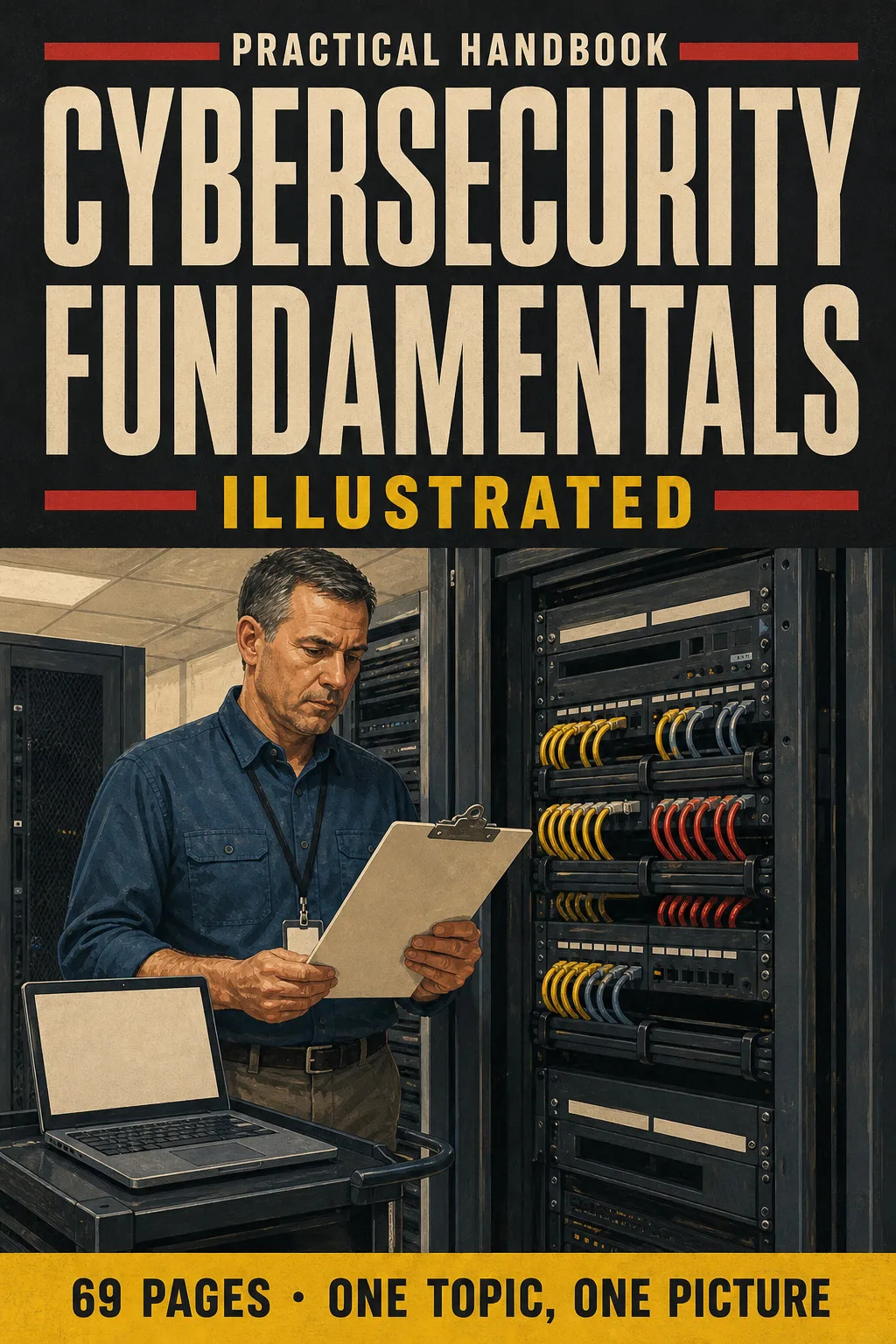
Cybersecurity and the Security+ Exam in Drawings One Topic on Every Page

The CIA triad, which key does what, the ports, network zones, MFA, access control, incident response and risk math. Every topic gets its own page: the drawing first, then what you need to remember. 69 illustrated pages.

START STUDYING THIS WAY

🔒 Secure checkout · PDF by email · 30-day guarantee

Every topic, its own pageEach attack, control and step drawn, with the explanation right beside it
69 illustrated pages8 parts, from the CIA triad to exam-day review
Up-to-date sourcesChecked against the current Security+ exam objectives, plus NIST SP 800-207 for zero trust
PDF by emailFormat

Look Inside the Book

Every page has one big drawing and a box with the ports, steps and formulas you need to know:

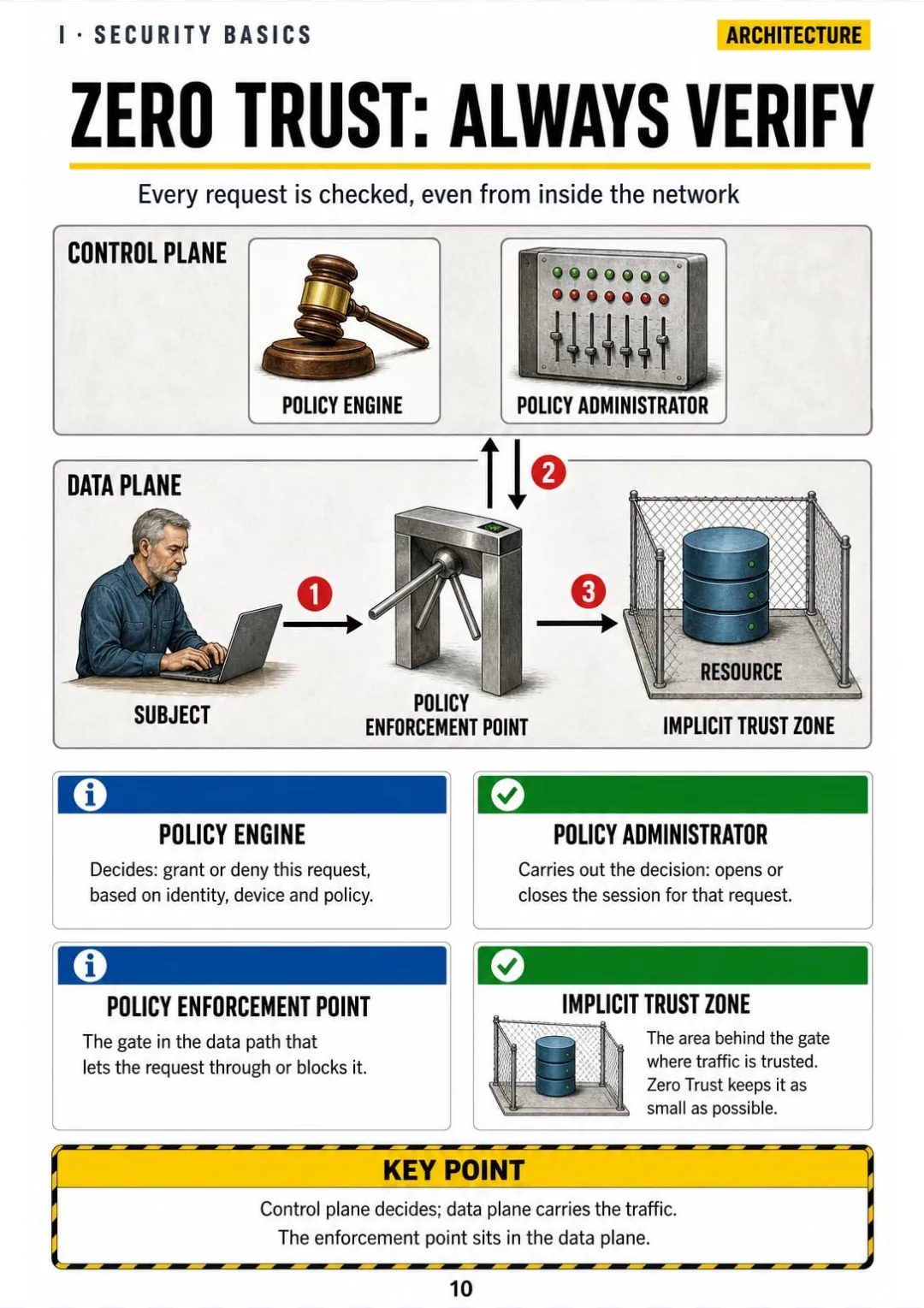
Policy Engine decides · Policy Administrator executes · Enforcement Point lets it through
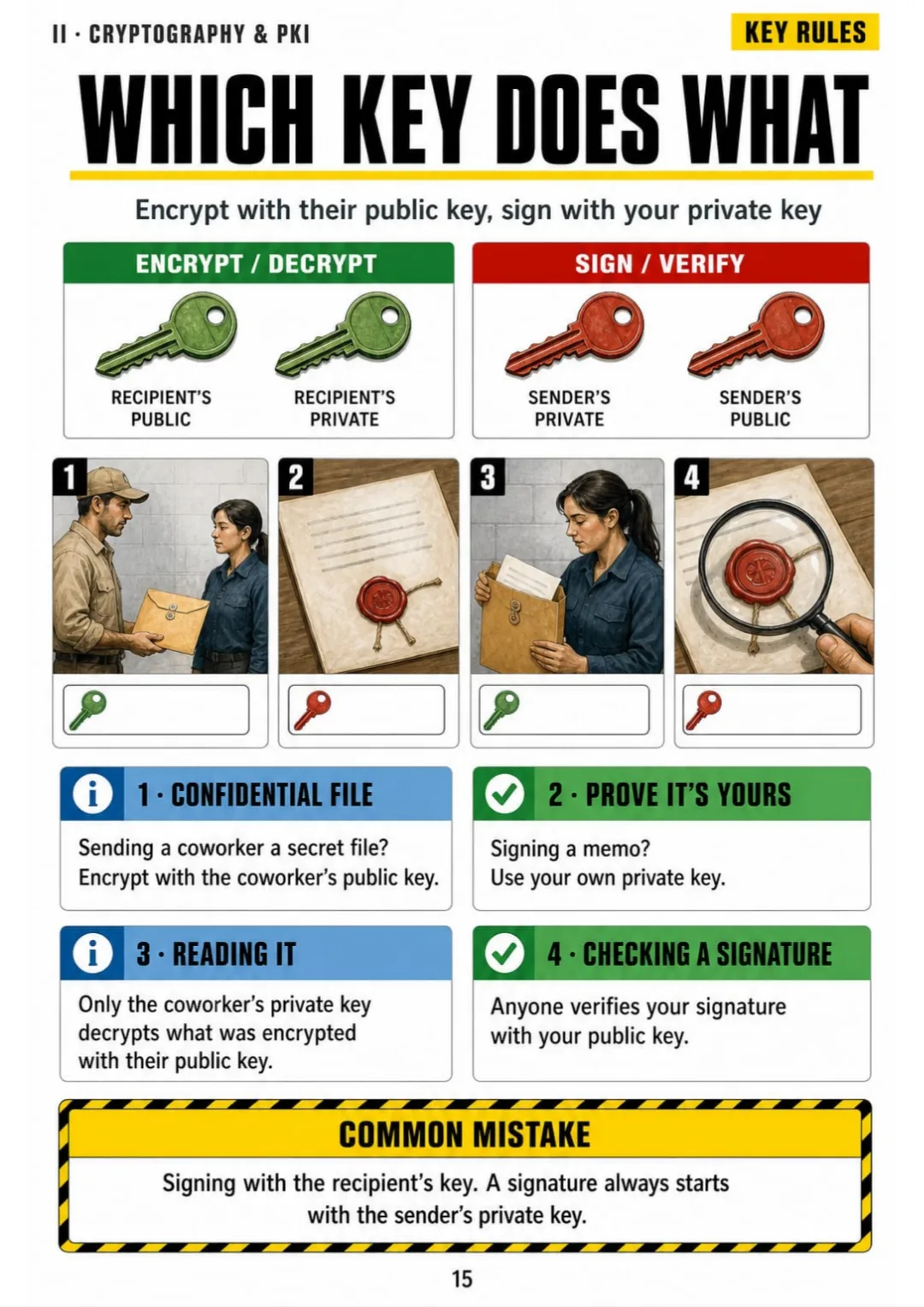
Confidentiality: recipient's public key · Signature: sender's private key
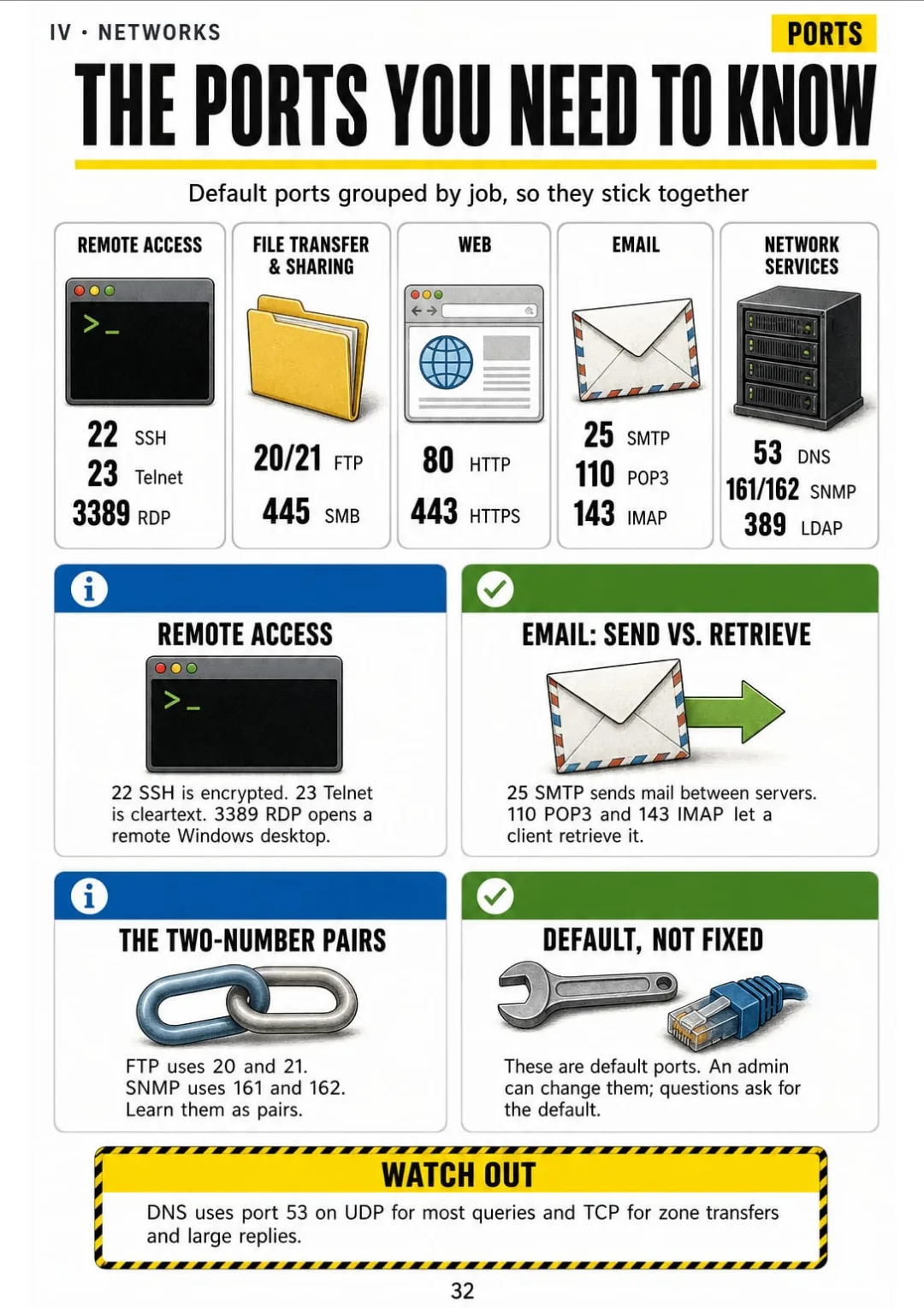
22 SSH, 23 Telnet, 53 DNS, 443 HTTPS, 3389 RDP: grouped by what they do
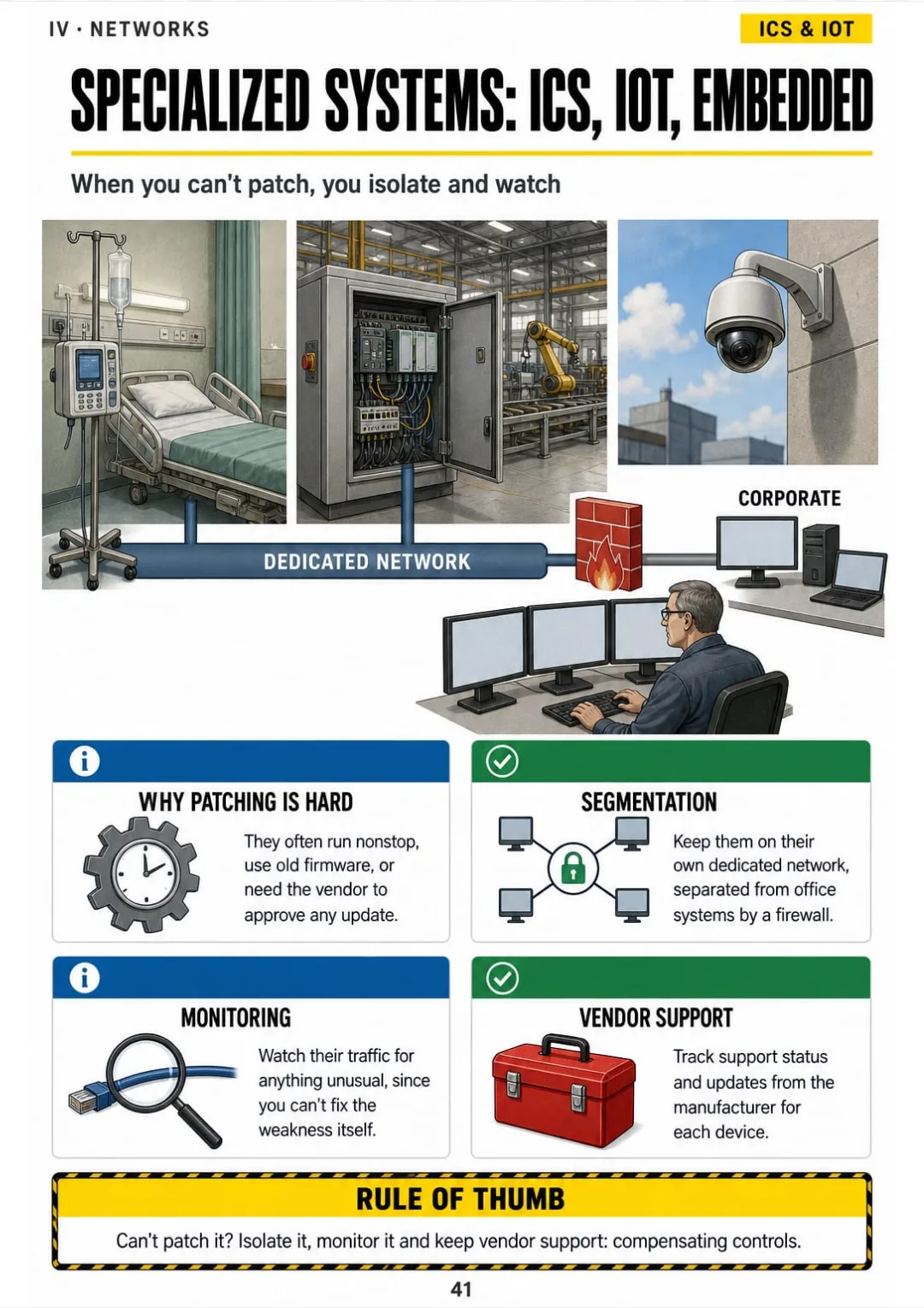
ICS/SCADA, IoT, embedded: segmentation, dedicated network, monitoring, vendor support
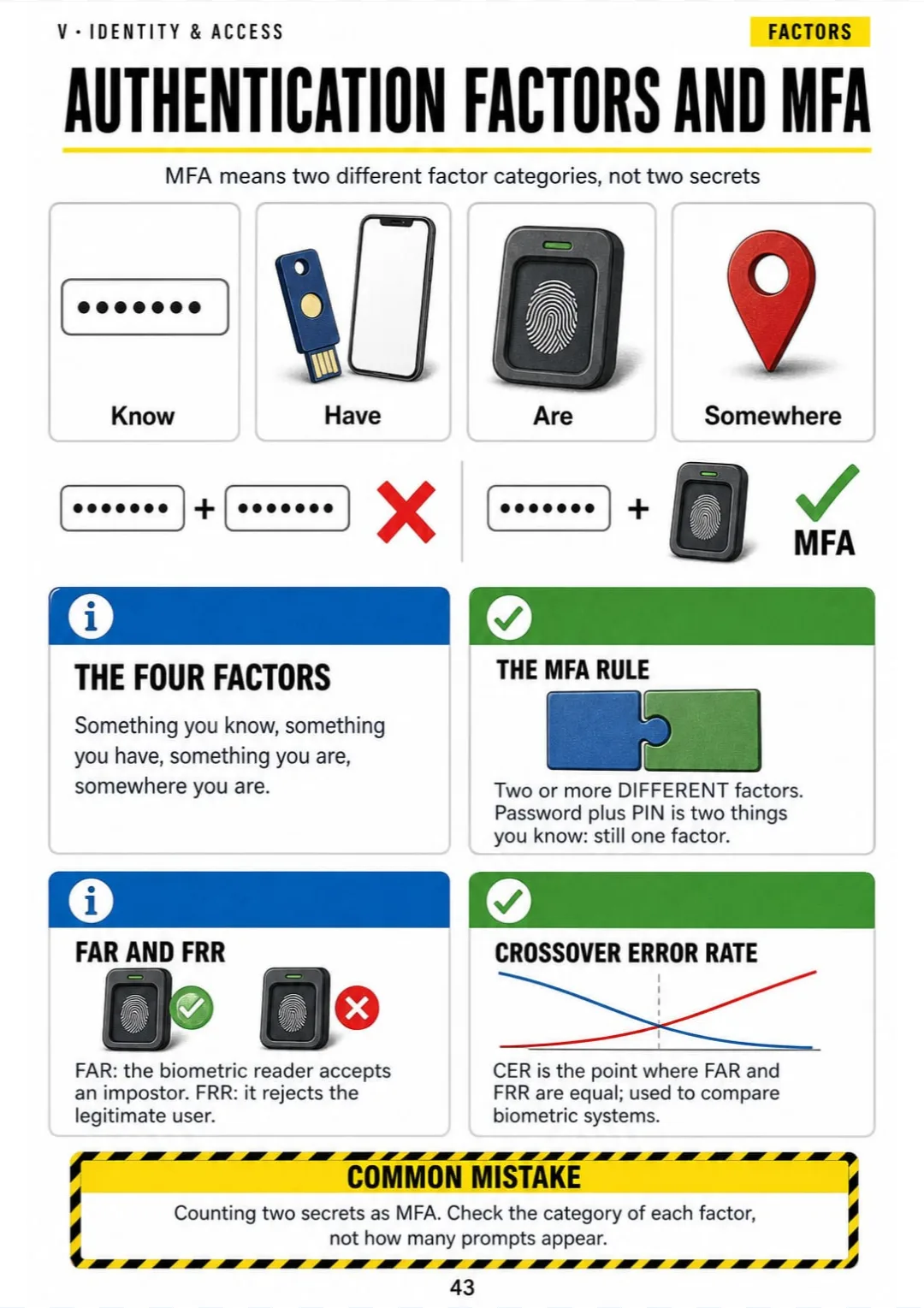
4 factors, 1 rule: MFA needs two different categories
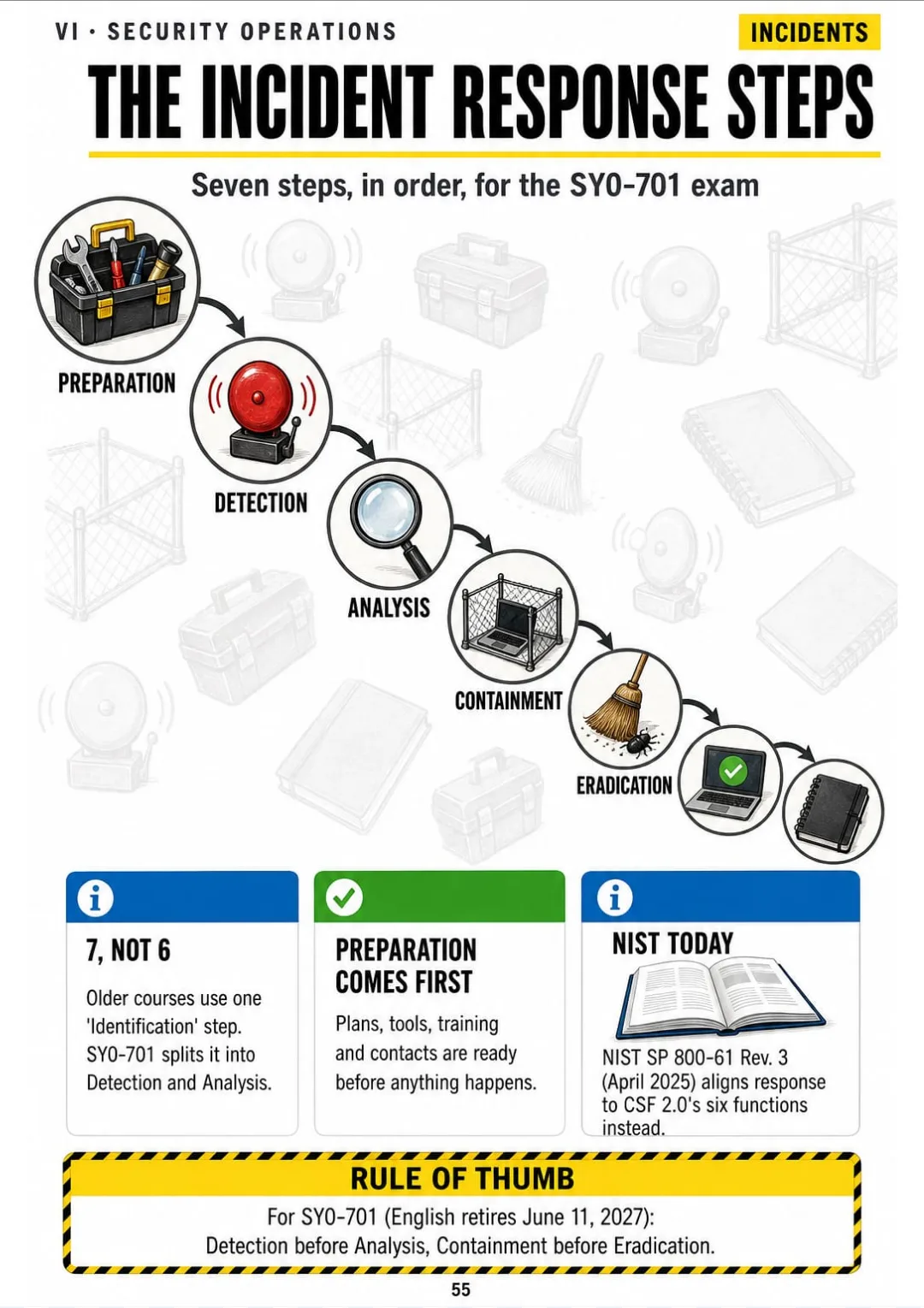
Preparation → Detection → Analysis → Containment → Eradication → Recovery → Lessons learned.
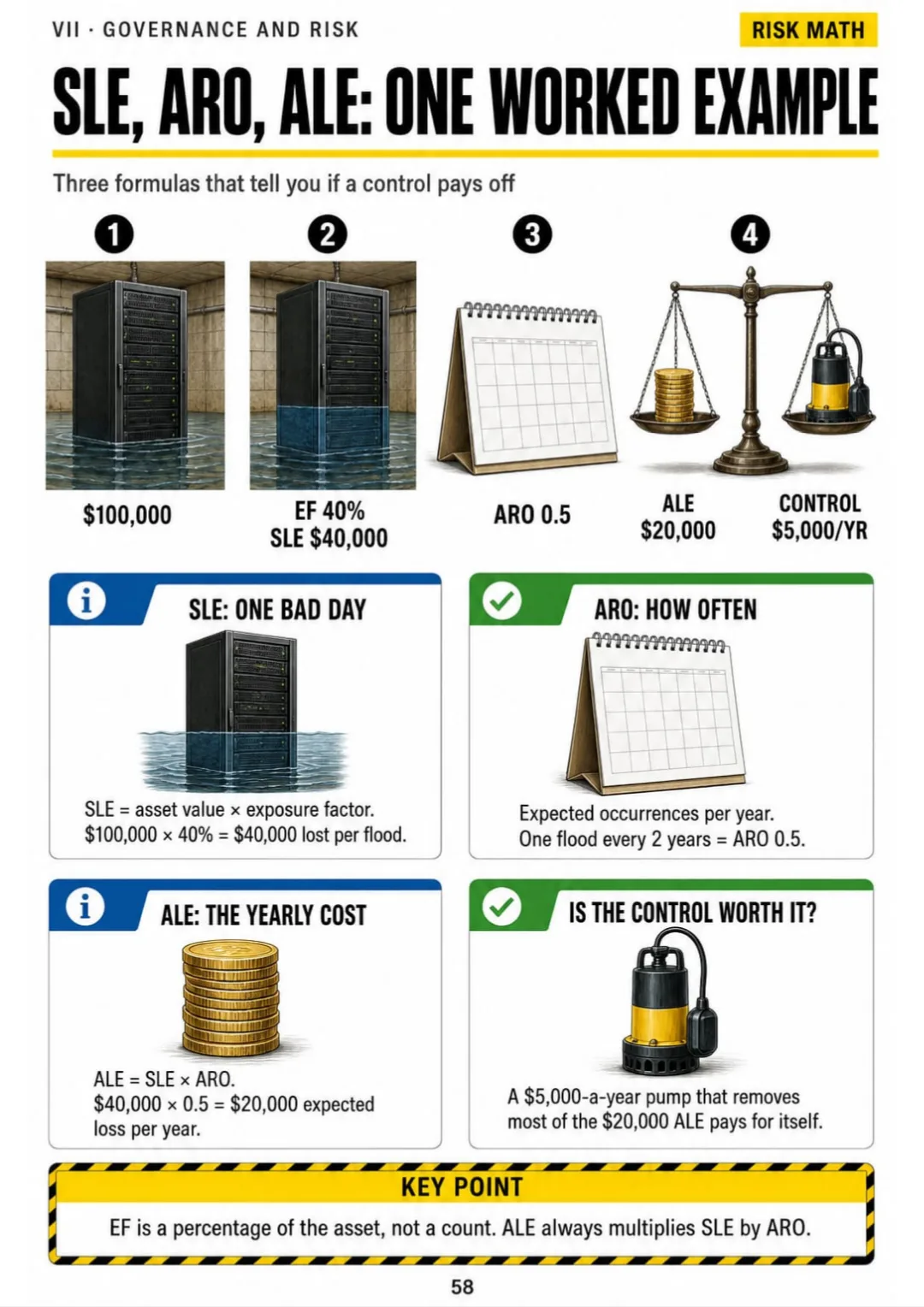
SLE = asset value × EF · ALE = SLE × ARO, worked out with a flooded server
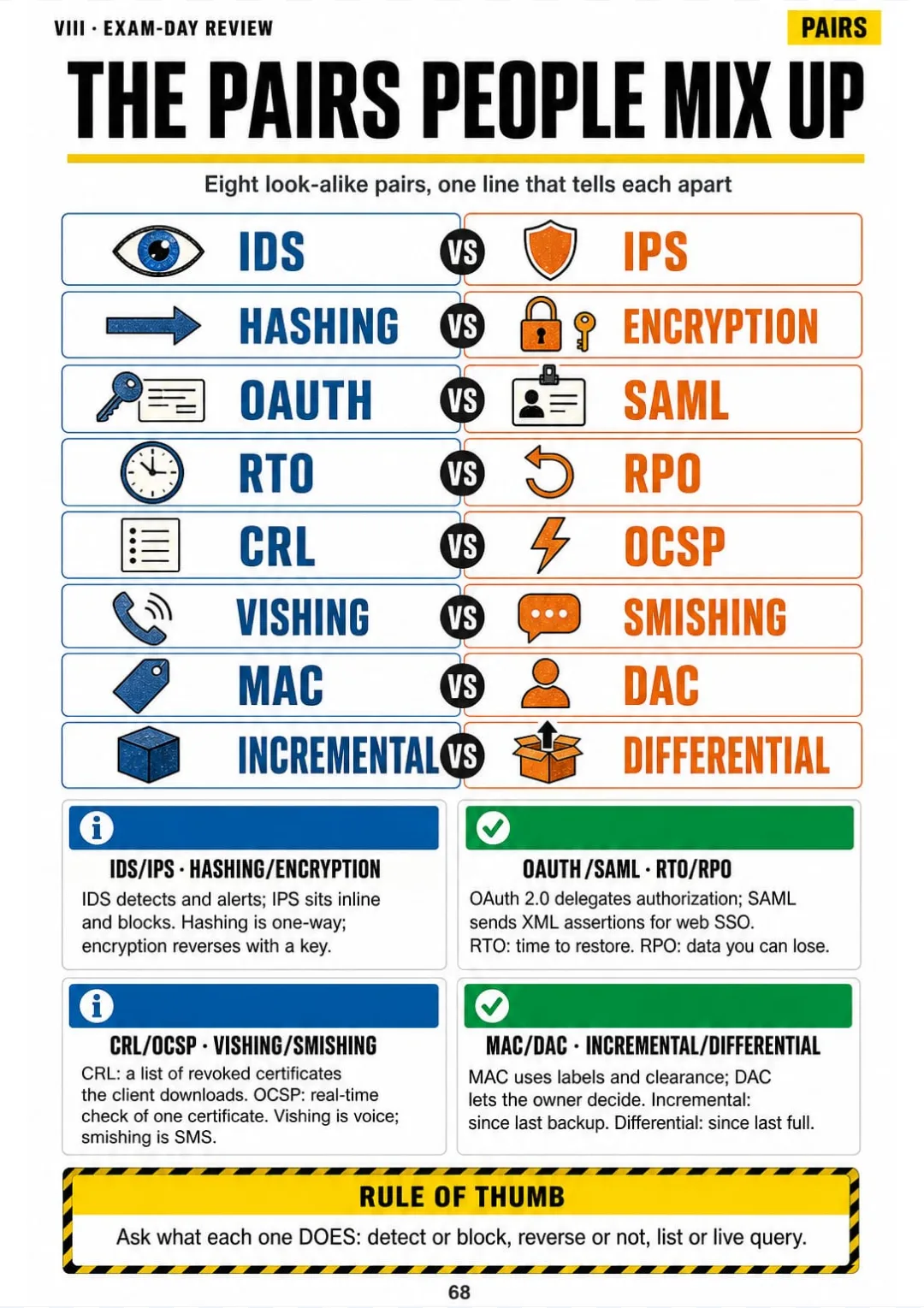
IDS detects, IPS blocks · RTO is time, RPO is data · CRL is a list, OCSP is live

Swipe to see more →

These are real pages from the book. The table of contents is the full one: 8 parts and 65 topics.

The Problem Isn't You. It's How It Was Explained to You.

You're on a practice question: a remote admin needs a secure shell into a server. Which port do you open? 22, 23, 3389… and every number looks equally right.

The study guide gives you the ports as one long table, sorted by number. Dozens of rows with nothing tying them together, so by morning they're just digits.

22 SSH, 23 Telnet, 53 DNS, 443 HTTPS, 3389 RDP: grouped by what they do

In this book the ports are one page, grouped by what they do: remote access together (22 SSH, 23 Telnet, 3389 RDP), name lookup with 53 DNS, the web with 443 HTTPS. You see the group first, then the number.

The same goes for which key does what, network zones, the MFA factors and the incident response steps: each one has its own page.

Next time a question asks for a port, you picture the group and pick the number. No flipping back to the table.

COMPARE FOR YOURSELF

The Same Topic, Two Ways to Study It

THIS
  • The study guide: line after line
  • Key pairs explained only in words
  • You walk into the exam still unsure
In asymmetric cryptography, each party holds a mathematically related key pair: a public key, which may be distributed freely, and a private key, which must remain under the exclusive control of its owner. To provide confidentiality, the sender encrypts the message with the recipient's public key, so that only the corresponding private key can decrypt it. Conversely, to provide integrity and non-repudiation, the sender signs a hash of the message with his or her own private key, which any party can verify with the sender's public key.
FOR THIS
  • Which key does what in one drawing
  • The two rules in one box
  • You see it and you get it
Confidentiality: recipient's public key · Signature: sender's private key
CONTENTS

Take a Look at the 8 Parts and 65 Topics

Security basics, cryptography and PKI, threats and attacks, networks and architecture, identity and access, security operations, governance and risk, and an exam-day review: 69 pages, all illustrated

ISecurity Basics · pp. 5-13
  1. How to Read Every Page: Threat → Control → First Move
  2. The CIA Triad
  3. AAA and Non-Repudiation
  4. Control Categories: Technical, Managerial, Operational, Physical
  5. Control Types: Preventive to Compensating
  6. Zero Trust: Never Trust, Always Verify
  7. Physical Security and Sensors
  8. Deception: Honeypot, Honeynet, Honeyfile, Honeytoken
  9. Change Management Without Surprises
IICryptography and PKI · pp. 14-21
  1. Symmetric vs. Asymmetric Encryption
  2. Which Key Does What
  3. Hashing, Salting and Key Stretching
  4. Digital Signatures Step by Step
  5. The Certificate Chain of Trust
  6. Revocation: CRL vs. OCSP
  7. Protecting Data in Every State
  8. Where Keys Live: HSM, TPM, Escrow, Key Exchange
IIIThreats, Attacks and Vulnerabilities · pp. 22-31
  1. Threat Actors and What Drives Them
  2. Social Engineering Vectors
  3. Malware Types Side by Side
  4. Password Attacks and Their Fingerprints
  5. Network Attacks
  6. Application Attacks
  7. Cryptographic Attacks
  8. Vulnerability Types
  9. Indicators of Compromise
  10. Mitigation Techniques
IVNetworks and Security Architecture · pp. 32-42
  1. The Ports You Need to Know
  2. Insecure Protocol → Secure Replacement
  3. Subnetting, One Worked Example
  4. Network Zones: Screened Subnet, Jump Server, Proxy
  5. Firewalls and Rule Order
  6. IDS vs. IPS
  7. VPNs and Secure Tunnels
  8. Wireless Security
  9. Cloud Models and Shared Responsibility
  10. Specialized Systems: ICS/SCADA, IoT, Embedded
  11. Resilience: RTO, RPO and Backups
VIdentity and Access · pp. 43-48
  1. Authentication Factors and MFA
  2. Access Control Models
  3. Least Privilege, Separation of Duties, PAM
  4. SSO and Federation: SAML, OAuth, OpenID Connect
  5. The Account Lifecycle
  6. Passwords and Passwordless
VISecurity Operations · pp. 49-57
  1. Secure Baselines and Hardening
  2. Endpoints and Mobile Devices
  3. Vulnerability Management Cycle
  4. Assets and Data Sanitization
  5. Logs, SIEM and Automation
  6. Email Security: SPF, DKIM, DMARC
  7. The Incident Response Steps
  8. Containment: What You Do First
  9. Digital Forensics: Order of Volatility
VIIGovernance, Risk and Compliance · pp. 58-64
  1. Quantitative Risk: SLE, ARO, ALE
  2. Risk Responses and the Risk Register
  3. Policies, Standards, Procedures, Guidelines
  4. Third-Party Agreements
  5. Data Roles and Classification
  6. Audits and Penetration Tests
  7. Security Awareness That Works
VIIIExam-Day Review · pp. 65-69
  1. The 5 Domains on One Page
  2. Reading a Scenario Question
  3. Performance-Based Questions
  4. The Pairs People Mix Up Most Often
  5. Final-Week Checklist

One Page, One Topic, All Clear

Think of it this way:

You're at work and a user calls: a strange pop-up, then the screen locked. Your manager wants to know what happens next.

In the book you open the incident response page and see the seven steps drawn in a row, from preparation to lessons learned, with containment marked as the move right after analysis.

4 factors, 1 rule: MFA needs two different categories

Same with the ports, which key does what, network zones, MFA and the risk math: each one on its own page.

Cybersecurity Fundamentals Illustrated is 69 illustrated pages in 8 parts, one topic per page, and the last part is an exam-day review: how to read a scenario question, how performance-based questions work and the pairs people mix up.

What you see drawn, you don't have to memorize.

What's Inside Cybersecurity Fundamentals Illustrated:

Ipp. 5-13

Security Basics

How to read every page, the CIA triad, AAA, control categories and types, zero trust, physical security, deception and change management.

IIpp. 14-21

Cryptography and PKI

Symmetric vs. asymmetric, which key does what, hashing and salting, digital signatures, the chain of trust, CRL vs. OCSP, data states and where keys live.

IIIpp. 22-31

Threats, Attacks and Vulnerabilities

Threat actors, social engineering, malware side by side, password, network, application and cryptographic attacks, vulnerability types, indicators of compromise and mitigation.

IVpp. 32-42

Networks and Security Architecture

The ports, insecure protocols and their secure replacements, one subnetting example, network zones, firewall rule order, IDS vs. IPS, VPNs, wireless, cloud, ICS/SCADA and IoT, RTO and RPO.

Vpp. 43-48

Identity and Access

Authentication factors and MFA, access control models, least privilege and PAM, SSO and federation, the account lifecycle and passwordless.

VIpp. 49-57

Security Operations

Baselines and hardening, endpoints and mobile, the vulnerability cycle, data sanitization, logs and SIEM, SPF/DKIM/DMARC, incident response, containment and order of volatility.

VIIpp. 58-64

Governance, Risk and Compliance

SLE, ARO and ALE, risk responses and the register, policies vs. standards vs. procedures, third-party agreements, data roles, audits and pen tests, awareness training.

VIIIpp. 65-69

Exam-Day Review

The 5 domains on one page, how to read a scenario question, performance-based questions, the pairs people mix up and a final-week checklist.

At the end of the book: An exam-day review part: the 5 domains on one page, scenario and performance-based questions, and the pairs people mix up.

Plus: 2 Free Books

Exam-Style Practice Questions with Explained Answers

BONUS 1: «Exam-Style Practice Questions with Explained Answers»

Value on its own: US$ 17.90

Practice the way the exam asks: multiple-choice and scenario questions, each answer explained in one line so you see why the other options are wrong.

Acronyms, Ports & Common Mistakes Review Sheets

BONUS 2: «Acronyms, Ports & Common Mistakes Review Sheets»

Value on its own: US$ 14.90

The acronyms, the port numbers and the mistakes that mix people up most often, on a few printable pages you can review the night before.

Cybersecurity Fundamentals Illustrated with 2 Free Books

  • Cybersecurity Fundamentals Illustrated: 69 illustrated pagesUS$ 63
  • BONUS 1: Exam-Style Practice Questions with Explained AnswersUS$ 17.90
  • BONUS 2: Acronyms, Ports & Common Mistakes Review SheetsUS$ 14.90
  • High-resolution PDF to printIncluded
Total value US$ 95.80
YOUR PRICE:
US$ 27
You save US$ 68.80
YES, I WANT CYBERSECURITY FUNDAMENTALS ILLUSTRATED FOR US$ 27

📄 This is a digital PDF book sent to your email: nothing is printed or shipped.

Secure purchaseEncrypted payment30-day guarantee

PDF by email: We email you Cybersecurity Fundamentals Illustrated as a PDF, together with the two free books. It's a single payment: no installments, no extra charges.

Who This Book Is For

You're starting Security+

You're starting Security+

Each topic on one page, always in the same layout: the drawing first, then the box with what to remember. What you studied Tuesday is one page away on Thursday.

Your exam date is close

Your exam date is close

The last part puts the 5 domains on one page, the pairs people mix up and a final-week checklist. You review by page, not by chapter.

You already work in IT

You already work in IT

Help desk, sysadmin or a defense contract that now asks for the cert: you see phishing and lockouts every week. The book puts the exam's names on what you already do.

Everything You Get Today

US$ 95.80US$ 27
YES, I WANT CYBERSECURITY FUNDAMENTALS ILLUSTRATED FOR US$ 27

📄 This is a digital PDF book sent to your email: nothing is printed or shipped.

30DAYS
GUARANTEE

30-Day Guarantee

Try Cybersecurity Fundamentals Illustrated for 30 days, bonus books included.

We refund everything if the file won't open, if the book isn't what you see here, if you were charged twice or if the email doesn't arrive. Just email us.

You pay once. No subscriptions.

Frequently Asked Questions

Is it for me if I work full-time and study for Security+ at night?

Yes. Each topic fits on one page, so one evening covers a few pages. The drawings aren't dumbed down: they carry the exam's real content, like the ports by group, which key does what, SLE × ARO and the 7 incident response steps. Each term is explained the first time it appears, but it doesn't teach IT from zero: if you've never worked with networks, pair it with a basic networking course.

Where does the content come from?

It's checked against the Security+ exam objectives currently in force, plus NIST SP 800-207 for zero trust. The seven incident response steps follow the exam's own model. The exam is changing versions: if you're booked on a newer one, compare the table of contents on this page with its objectives before you buy.

Is this official material?

No. It's an independent study book, not affiliated with or endorsed by CompTIA. It doesn't include an exam voucher or a certificate: you book and pay for the exam separately.

Does it replace a course or training?

No. It's what you use alongside your course: the videos explain, and here each topic is on one page you can look at again the night before. Use it with your labs and your own practice.

Are the practice questions the ones on the exam?

No. Every question is written for this book, in the style of the exam. None of them are real exam questions.

When and how do I get it?

As a PDF by email: the book and the 2 bonus books go to the address you enter at checkout.

Do I have to pay every month?

No. It's a one-time payment.

Can I have it on paper?

Yes. The PDF is printable, at home or at a print shop.

How does the refund work?

You have 30 days. We refund everything if the file won't open, if the book isn't what you see on this page, if you were charged twice or if the email doesn't arrive: just email us.

Before You Close This Page

No more rereading with nothing sticking.

Ports, keys and network zones: you see them drawn and you're set.

You walk into the exam knowing where everything goes.

Drawings make studying faster.

The book is right below.

One-time payment: US$ 27 · Guarantee: 30 days · PDF by email

YES, I WANT CYBERSECURITY FUNDAMENTALS ILLUSTRATED FOR US$ 27

📄 This is a digital PDF book sent to your email: nothing is printed or shipped.